
MVP Development Guide for Startups: 7-Phase Step-by-Step Process (2026)
A methodology tested on 7 startups for developing an MVP from idea to launch: market validation, Figma prototype, tech stack selection, Next.js development, first paying customers, integrated SEO, and GDPR security. Everything you need to know to turn your idea into a real product.

Luca Di Domenico
December 23, 2025 - 18 min read
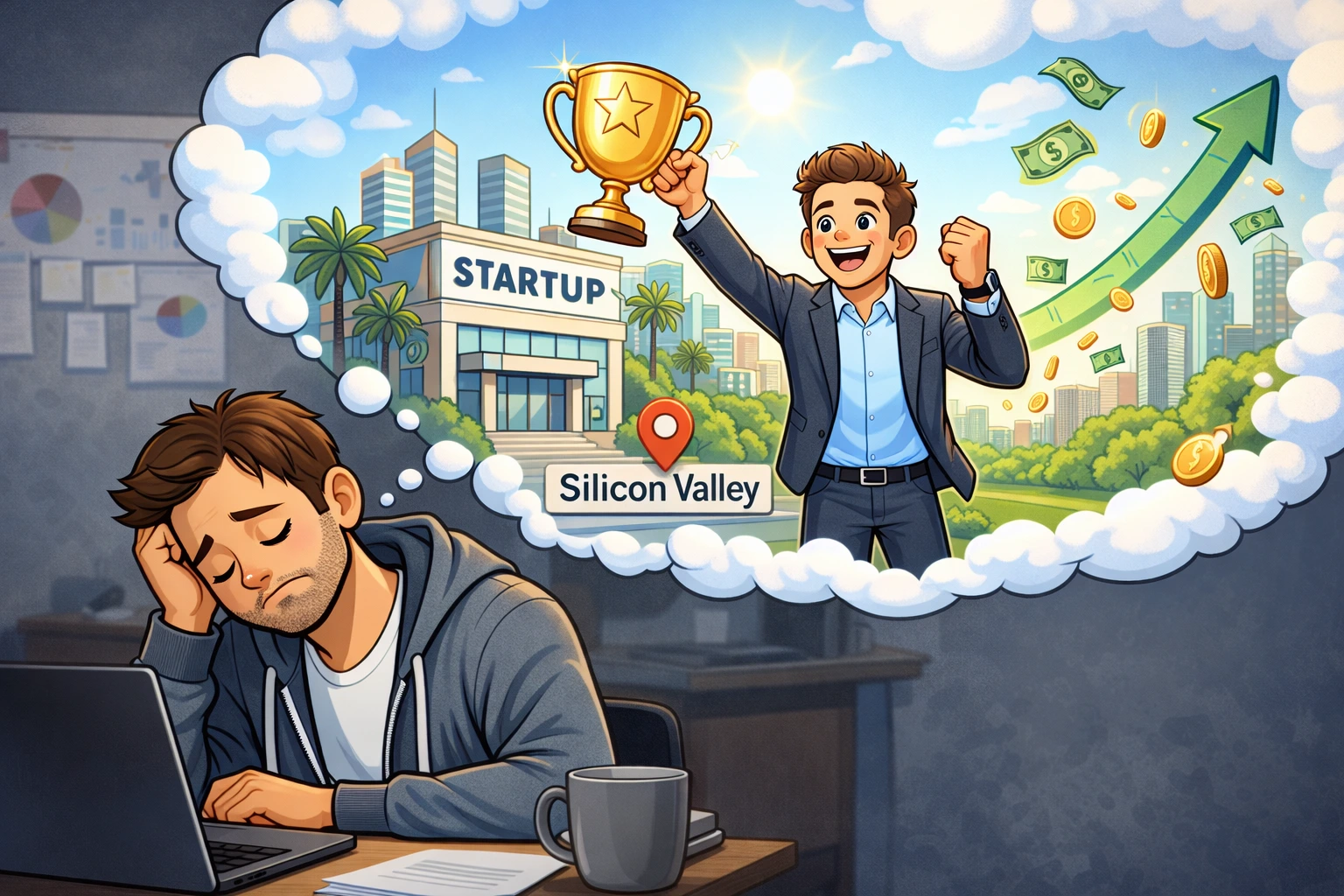
You have a startup idea that's been consuming your thoughts for months. You know it could work, but you don't know where to start in order to turn it into a real product that people can use and are willing to pay for.
The problem isn't a lack of motivation or technical skills: it's that no one has ever explained the step-by-step process for developing a startup MVP, from idea validation through launch with your first paying customers.
After developing MVPs for over 7 tech startups and launching my own projects, I've refined a 7-phase methodology that takes you from idea to working product in 6-10 weeks, with a clear and predictable budget.
In this comprehensive guide, I'll show you exactly how to develop a startup MVP step by step, with real-world examples, actual costs, specific tools, and the technical choices that truly make a difference.
Phase 1: Market Research - Talk to the Right People
The number one mistake founders make: starting with the product instead of the problem. Before writing a single line of code or opening Figma, you need to understand if you're solving a real problem for real people.
How to Conduct Effective Market Research
Reading comments on Reddit or Twitter isn't enough. You need to speak directly with 10-20 people in your target niche:
- Offline: industry events, meetups, conferences - collect contacts and propose casual conversations, perhaps over a good coffee
- Online: LinkedIn, niche communities, specialized forums - engage with the community and send personalized direct messages
Don't just rely on post comments: invite people to 10-20 minute Zoom/Google Meet calls. The insights you get from a one-on-one conversation are worth 100 times more than any survey or comment.
Questions to Ask During Research
Don't sell your idea. Ask open-ended questions to understand:
- What's their current workflow for solving problem X?
- What tools do they use today and what frustrates them most about them?
- How much time/money do they lose because of this problem?
- Have they tried alternative solutions? Why did they stop using them?
- If a product existed that does Y, how much would they be willing to pay?
When you can skip this phase: If you already know the market extremely well because you've worked in the industry for years, or you're solving a problem you've personally experienced, you can accelerate. But be careful: the risk is projecting your own needs onto a market that doesn't share them.
Real Example
A founder wanted to build a scheduling tool for barbershops. After 12 calls with barbers, he discovered that the real problem wasn't scheduling (already solved by mobile apps), but inventory management for products and suppliers. He pivoted completely before writing any code, saving over $20,000 in wasted development!
Phase 2: Market Validation - Competitors Are Your Friends
This is the phase that confuses many early-stage founders:
"I searched online and there are already 5 competitors doing something similar. Does that mean my idea is worthless?"
Answer: No, quite the opposite! It means you have a validated market. Someone is already paying to solve that problem.
How to Approach Competitors
The existence of competitors isn't a roadblock, it's validation. Your goal is to understand:
- What they're doing well - which features are considered essential by users? Read reviews on G2, Capterra, Reddit posts, and industry forums
- Where they're falling short - what are users' recurring complaints? Complexity, pricing too high, missing feature X?
- Differentiation opportunities - can you enter with better technology, superior UX, lower price, or serve an underserved niche segment?
Two Paths to Differentiation
Approach 1: Incremental Improvement
Enter with a technical solution at least equal to or better than competitors, but with a clear advantage: faster, more affordable, simpler to use, better customer support.
Approach 2: Unique Point of View
Start from an entirely different angle and develop something unique. Example: competitors are desktop-first, you're mobile-first. Competitors are horizontal, you verticalize for a specific industry.
Red Flag
If you can't find competitors: proceed with caution. It might mean there's no market, or the problem is so complex or heavily regulated that no one has managed to solve it. Do double validation before investing your budget.
Phase 3: Figma Prototype - Visualize Before You Build
You've validated the problem and figured out how to differentiate. Now it's time to visualize the product before writing code.
The Figma prototype is the phase that separates successful MVPs from those that burn budget developing the wrong features.
What to Do in This Phase

- Design all the main screens: homepage, dashboard, input forms, results screens, settings, user profile
- Define complete user flows: from the landing page to completing the main action (e.g., creating first project, making a purchase, exporting data)
- Map buttons, links, navigation: every click should be clear. Where does that button lead? What happens after that form submission?
Tools for Creating the Prototype
- Figma (recommended) - industry standard, free for basic use, thousands of free component libraries
- Sketch - Mac-only alternative
- Excalidraw - for quick low-fidelity wireframes
Required Level of Detail
For an MVP, you don't necessarily need pixel-perfect design. You need functional clarity: each screen should be detailed enough for a developer to understand what to implement.
Pro Tip
Validate the prototype with 3-5 target users before moving to development. Invite them to a 1-on-1 call and have them navigate the interactive Figma prototype, asking: "What do you expect to happen if you click here?" If their answer differs from what you designed, you've found a UX problem to fix now, not after development.
Phase 4: MVP Development - Two Possible Paths
You have a validated prototype and you're ready to build. This is the phase that requires the biggest investment of time and budget. The fundamental choice is: no-code/low-code vs professional developer.
Path 1: No-Code/Low-Code
When to use no-code:
- You're building a directory of services or resources
- Advanced landing page with forms and basic integrations
- Tool that generates output via external APIs (e.g., AI image generator with prompts)
- Simple marketplace without complex logic
Recommended tools:
- Lovable - creates simple web apps using AI
- Bubble - no-code alternative to Lovable for web apps with database and conditional logic
- Webflow - for content-rich landing pages
- Airtable + Softr/Pory - for directories and database-driven sites
Advantage: you don't need to know how to code or pay for a developer.
Disadvantage: Obvious technical limitations as soon as the product grows. Difficult to customize beyond basic functionality. High monthly costs for enterprise no-code tools.
Path 2: Professional Developer
When you need a developer:
- SaaS with complex business logic
- Dashboard with custom data visualizations
- Multi-level authentication and permissions system
- Multiple API integrations and data sync
- Critical performance requirements (real-time, high load)
The Luca Di Domenico Studio Method: A Single Senior Full-Stack Developer
Here's a critical point that makes all the difference in cost and speed:
Most agencies propose a team of 3-5 people (project manager, designer, frontend dev, backend dev). It seems reassuring, but in reality it introduces massive inefficiencies: constant meetings, slow communication, code handoffs between members.
With the Luca Di Domenico Studio Method, a single senior full-stack developer is as productive as a traditional team of 3 people.
How is this possible?
- AI as a multiplier: Coding assistants (Claude, Cursor, GitHub Copilot) accelerate development by 200-300%
- Stack optimized for startups: Node.js + Next.js + TypeScript + Tailwind + Supabase - maximum speed, zero complex configurations, single codebase for frontend and backend
- Zero communication overhead: No internal meetings, no handoffs, immediate decisions
- Clear requirements: Figma prototype + detailed specs = zero ambiguity
- Founder focus: The developer understands what limited runway means and optimizes every choice for time-to-market
Concrete result: Costs reduced by 30-40% compared to traditional teams, delivery 3-4 weeks faster, superior code quality (one developer maintains architectural consistency end-to-end).
Learn more about the complete method here: The Luca Di Domenico Studio Method.
Recommended Tech Stack for SaaS MVPs
If you go with a professional developer, this is the stack I recommend in 2026 for startup MVPs:
- Frontend: Next.js 15+ with App Router and Tailwind CSS
- Backend: Node.js with Express
- Database: PostgreSQL with Supabase
- Authentication: Supabase Auth
- Hosting: Vercel (free frontend up to high traffic) + Render (for backend)
- Payments: Stripe
- Transactional email: Resend or SendGrid
This stack is battle-tested, reduces complexity, accelerates development, and keeps infrastructure costs under $100/month for the first 6 months.
I've written a complete guide on Next.js vs React for MVP development where I explain in detail why Next.js is the strategic choice for 90% of startups.
Want to develop your MVP with our method?
At Luca Di Domenico Studio, we develop MVPs for early-stage startups following exactly this 7-phase methodology. One senior full-stack developer (and a senior designer on request), optimized stack, AI as a multiplier, SEO integrated from day one.
Tell us about your project, and we can analyze your idea and define a realistic roadmap, tech stack, and budget.
 Tell us about your project
Phase 5: First Users - Build the Relationship with Customers
You've developed the first working version of the MVP. It's not perfect, secondary features are probably missing. That's normal. That's exactly what an MVP should be.
Now comes the most critical phase: getting the first 5-20 people to use it and pay for the product.
How to Identify Your First Early Adopters
Ideal early adopters are:
- The 10-20 people you interviewed in Phase 1 - they're already warm, they know the problem, they've expressed interest
- Users who signed up for the waitlist during validation (if you created a landing page)
- Direct contacts in your network who fit the target profile and trust you
How to Onboard Early Adopters
Don't just send a link and hope they sign up. Do manual, personalized onboarding:
- Personalized email/message: "We've developed the first version of [product]. You were one of the people who talked to me about problem X. Would you like to be among the first 20 to use it?"
- Optional onboarding call: 15 minutes to show the product in action, explain how to use it, answer questions
- Early adopter offer: Lifetime discount (e.g., 50% forever) or free access for the first 3-6 months in exchange for detailed feedback
- Direct communication channel: Email, Slack/Discord, WhatsApp - they need to be able to contact you easily
Support Contact Points on Every Page
A crucial element of successful MVPs: access to support.
On every product page, include at least one of these:
- Live chat widget (e.g., Chatwoot)
- "Need help?" link that opens a pre-filled email
- Feedback page to report bugs or request features
Bugs and unforeseen issues are normal. What matters is resolving them quickly and making customers feel heard.
Goal: Build a Relationship
Your first 5-20 customers aren't just users. They're co-creators of the product.
You need to:
- Collect continuous feedback on what works and what doesn't
- Iterate rapidly (fix bugs in 24-48h, new features in 1-2 weeks)
- Make them feel part of the journey: "Feature X that you requested is now live!"
- Incentivize with benefits: discounted lifetime pricing, early access to new features, brand ambassador status
Real Example
A B2B SaaS startup launched with 8 early adopters. In the first 30 days, they received 47 modification/bug fix requests. They responded to all of them within 24 hours and fixed 12 critical bugs in one week. Result: 7 out of 8 converted to paying customers after the trial period. The customer who didn't convert provided valuable feedback that led to 3 crucial new features.
If you're thinking about converting your internal software to a SaaS model, read: SaaS Conversion: Complete Guide.
If you want to learn the secrets to increasing your customers through MVP landing pages optimized for sales, read: MVP Landing Page That Converts: 7 Validated Strategies.
Phase 6: SEO Integrated from Day One
This is the phase that most MVPs completely neglect, burning organic growth opportunities in the critical first months.
For B2B digital businesses and SaaS, organic traffic from Google is the most sustainable and cost-effective acquisition channel in the long term.
But SEO works over the long term: integrating it from the start is strategically the best choice.
Why Next.js is advantageous for SEO: One of the reasons (but not the only one) is Server-Side Rendering: it means Google and other search engines or LLMs see complete HTML instantly, without having to execute JavaScript. This improves indexing and ranking.
Also read: Next.js vs React for MVP development.
SEO Content: Blog Editorial Plan
The blog isn't a "nice to have." It's a lead generation engine for B2B SaaS.
Strategy: Publish 2-4 articles per month targeted at specific keywords.
Expected Results
With an optimal SEO strategy, in 3-6 months you can expect: 500-2,000 organic visits/month, 5-15 keywords ranking on Google's first page, 20-50 qualified leads from organic traffic. Traffic grows exponentially: at 12 months you can reach 3,000-8,000 visits/month.
Phase 7: GDPR and Security - Don't Neglect Compliance
The final step, but no less important: GDPR and software security.
Many MVPs launch without thinking about compliance and security. Then the first enterprise customers arrive and ask: "Are you GDPR compliant? Where is the data hosted? Do you have SOC2?" And you have to fix everything retroactively. This approach is not recommended for obvious reasons.
It's much simpler and more cost-effective to integrate compliance and security into the initial architecture.
GDPR: Essential Checklist
- Complete Privacy Policy: Describe what data you collect, how you use it, who you share it with, how you protect it
- Compliant Cookie Banner: Explicit consent for non-essential cookies (analytics, marketing)
- Data retention policies: Define how long you keep data and when you delete it
- Right to deletion: Users must be able to request account and data deletion
- Data export: Users must be able to export their data (GDPR "right to portability")
- Consent management: Track user consents for specific processing
Security: Basic Principles
You don't need to be a cybersecurity expert, but these principles are non-negotiable:
- HTTPS everywhere: SSL/TLS certificate for the entire site (free with Let's Encrypt/Vercel)
- Rate limiting and Captcha: Prevent brute force attacks on login and API abuse
- Environment variables: Never commit API keys/secrets to remote git repositories
Hosting and Infrastructure:
- Use certified providers: Vercel (SOC2), AWS, Google Cloud are compliant out-of-the-box for GDPR if you configure EU datacenters
- Database in EU: For GDPR compliance, EU user data must be hosted in EU datacenters
Pro Tip
At Luca Di Domenico Studio, we integrate security by design thanks to 5 years of cybersecurity experience. Every MVP we develop follows OWASP Top 10 principles from the architecture level. It's not a post-launch patch, it's in the DNA of the code.
Conclusion: From Methodology to Execution
You now have a complete 7-phase methodology for developing a startup MVP from idea to launch with your first paying customers:
- Market Research - Talk to 10-20 people to validate the problem
- Market Validation - Competitors = validated market, find your differentiating angle
- Figma Prototype - Visualize before building to optimize budget
- MVP Development - No-code for simple products, senior developer for complex SaaS (with the Luca Di Domenico Studio Method one developer = traditional team)
- First Users - 5-20 early adopters, manual onboarding, direct relationship
- SEO from Day One - Organic traffic is the most sustainable channel for B2B SaaS
- GDPR and Security - Compliance and data protection from day 1
If this methodology reflects how you want to approach your MVP, and you want a technology partner who follows exactly this process, Luca Di Domenico Studio develops MVPs for early-stage startups following this framework tested on 7 projects.
One senior full-stack developer, optimized stack, AI as a multiplier, integrated SEO and security.
Book a free strategic call to analyze your idea and define a realistic roadmap, tech stack, and budget.
FAQ: Startup MVP Development
How do you develop an MVP for a startup step by step?
The process for developing a startup MVP consists of 7 phases: 1) Market research - talk to 10-20 people in your niche to understand real problems; 2) Market validation - verify that competing solutions exist (validated market) and identify your differentiating angle; 3) Figma prototype - design all screens and user flows; 4) MVP development - use no-code for simple products or a professional developer for complex software; 5) First users - onboard 5-20 early adopters and collect feedback; 6) Integrated SEO - optimize for keywords and publish content; 7) GDPR and security - implement compliance and data protection.
How can you validate a startup idea without a budget?
To validate a startup idea without a budget:
- Talk to 10-20 people in your target niche via LinkedIn, forums, and online communities - gather information about their real problems
- Create a landing page with Carrd or Webflow (free) describing the solution and include a form for early access
- Share the landing page on Reddit, Facebook Groups, and niche forums to generate interest
- Analyze competitors with free tools (SimilarWeb, Google Trends) to confirm the market exists
- If you receive 20-50+ qualified interest emails in 2 weeks, you have positive initial validation
- Offer discounted pre-orders to validate willingness to pay. A good portion of validation can happen through direct conversations before spending on development. The key is that your first customers are willing to pay for your product.
What's the difference between an MVP and a prototype for startups?
Prototype - a non-functional visual representation of the product, created in Figma or design tools, used to validate UX and user flows, with no real backend or database.
MVP - a truly functional product with minimum essential features, users can use it and pay for it, has backend, database, authentication, and is deployed on production servers.
When to use them: Prototype before development to validate design and get user feedback. MVP after prototype validation to test product-market fit with real users. Common mistake: skipping the prototype and developing directly, wasting budget on the wrong features.
How do you find the first customers for a startup MVP?
Strategies for finding your first 5-20 MVP customers:
- Direct network - contact the 10-20 people interviewed during initial research, they're already warm leads
- LinkedIn outreach - identify decision makers in the target niche, send personalized messages
- Niche communities - Reddit subreddits, Facebook Groups, Discord servers, specialized forums
- Product Hunt - launch in early access mode for initial visibility
- Targeted cold email - curated list of 50-100 prospects, ultra-personalized emails
- Early adopter incentives - offer discounted lifetime deal or free access in exchange for feedback
Focus: quality over quantity. 10 engaged users giving feedback are worth more than 100 passive signups. Timeline: 2-4 weeks for the first 10-20 early adopters.
Related resources
Continue reading
Learn more about our method for developing an MVP, which tech stack to choose, and how to increase your startup's conversions